
- Medical License No.: 144189
- 021-8805 0794
- 09128338140
Dr. Zahra Sadat Shamekhi
General Dentist

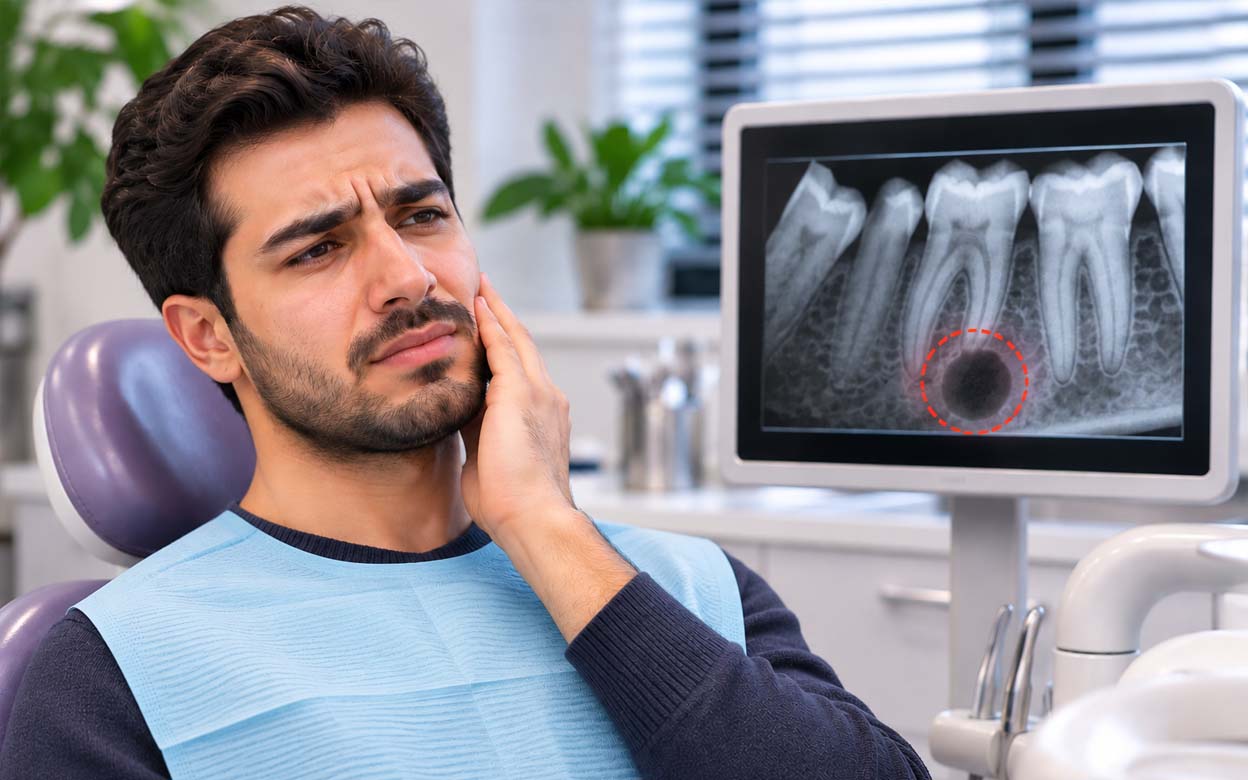
A dental cyst is typically a tissue-lined cavity that may contain fluid or semi-solid material. It can develop around a tooth or within the jawbone.
There are several types of dental cysts. Some develop as a result of long-standing infections around tooth roots, while others are associated with impacted teeth or tooth development.
Important: Not every dark area or lesion visible on a dental X-ray is necessarily a cyst. In some cases, a definitive diagnosis requires a histopathological examination.
Small dental cysts may not cause any symptoms. However, as a cyst grows, the following signs may develop:
Swelling of the gums or jawbone
Pain or pressure around the affected tooth
A noticeable lump or swelling on the gums
Movement or loosening of nearby teeth
Pus discharge or infection in some cases
Numbness or altered sensation in the jaw in rare cases
These symptoms are not exclusive to dental cysts and may also occur with other dental conditions.
One recognized cause is long-standing inflammation or infection around the root of a tooth with a non-vital pulp. This condition may lead to the development of a radicular cyst.
Some cysts, such as dentigerous cysts, develop around the crown of an unerupted tooth and may be associated with impacted wisdom teeth.
Certain jaw cysts originate from tissues involved in tooth formation and development.
Most dental cysts are benign. However, this does not mean they should be ignored.
As some cysts grow, they may cause jawbone destruction, displacement of nearby teeth, damage to surrounding structures, or infection.
Therefore, even a painless cyst should be evaluated to determine its type, size, and need for treatment.
A dentist begins by examining the teeth and gums and may recommend imaging when necessary.
Diagnostic methods may include:
Conventional dental X-rays
Panoramic dental radiographs
Cone Beam Computed Tomography (CBCT) in selected cases
Biopsy and histopathological examination to identify the type of lesion
Imaging helps determine the location and size of a lesion, but it may not always be sufficient to establish its exact nature.
Treatment depends on the type of cyst and the condition of the affected tooth.
If a lesion develops around the root of an infected tooth, root canal treatment or root canal retreatment may help eliminate the infection and allow the lesion to heal.
In these cases, surgery is not always the first treatment option.
Some dental cysts require surgical removal. During this procedure, the cystic tissue is removed and is usually sent for pathological examination.
For certain large cysts, techniques such as marsupialization or decompression may initially be used to reduce pressure and decrease the size of the lesion before further treatment.
If the affected tooth is severely damaged or cannot be preserved, extraction may be necessary as part of the treatment.
Having a dental cyst does not automatically mean the tooth must be extracted.
A true dental cyst should not be expected to disappear without proper diagnosis and follow-up.
However, some inflammatory lesions around tooth roots may gradually shrink or heal after successful treatment of the underlying infection.
A dentist must determine which treatment is appropriate for each case.
If you notice persistent swelling, an unusual lump, pain, or discharge around your gums or jaw, you should schedule a dental examination.
If you develop rapidly increasing facial swelling, fever, difficulty swallowing, or breathing problems, seek immediate medical attention.
No. Most dental cysts are benign. However, some jaw lesions may have a similar appearance, making accurate diagnosis important.
No. Many dental cysts are painless and are discovered incidentally during dental imaging.
Antibiotics alone cannot eliminate a dental cyst. If a spreading infection or certain medical conditions are present, antibiotics may be prescribed alongside the primary treatment.
The risk of recurrence depends on the type of cyst and the treatment method. Some types require long-term monitoring.
A dental cyst may remain unnoticed for a long time. However, as it grows, it can potentially damage surrounding teeth and the jawbone.
Early diagnosis and appropriate treatment are essential for preventing possible complications.
For dental and jaw examinations, you can visit Dr. Zahra Sadat Shamekhi, a dentist practicing in the Mollasadra and Vanak area of Tehran. When necessary, patients may be referred to an oral and maxillofacial surgeon or another appropriate specialist.