
- Medical License No.: 144189
- 021-8805 0794
- 09128338140
Dr. Zahra Sadat Shamekhi
General Dentist

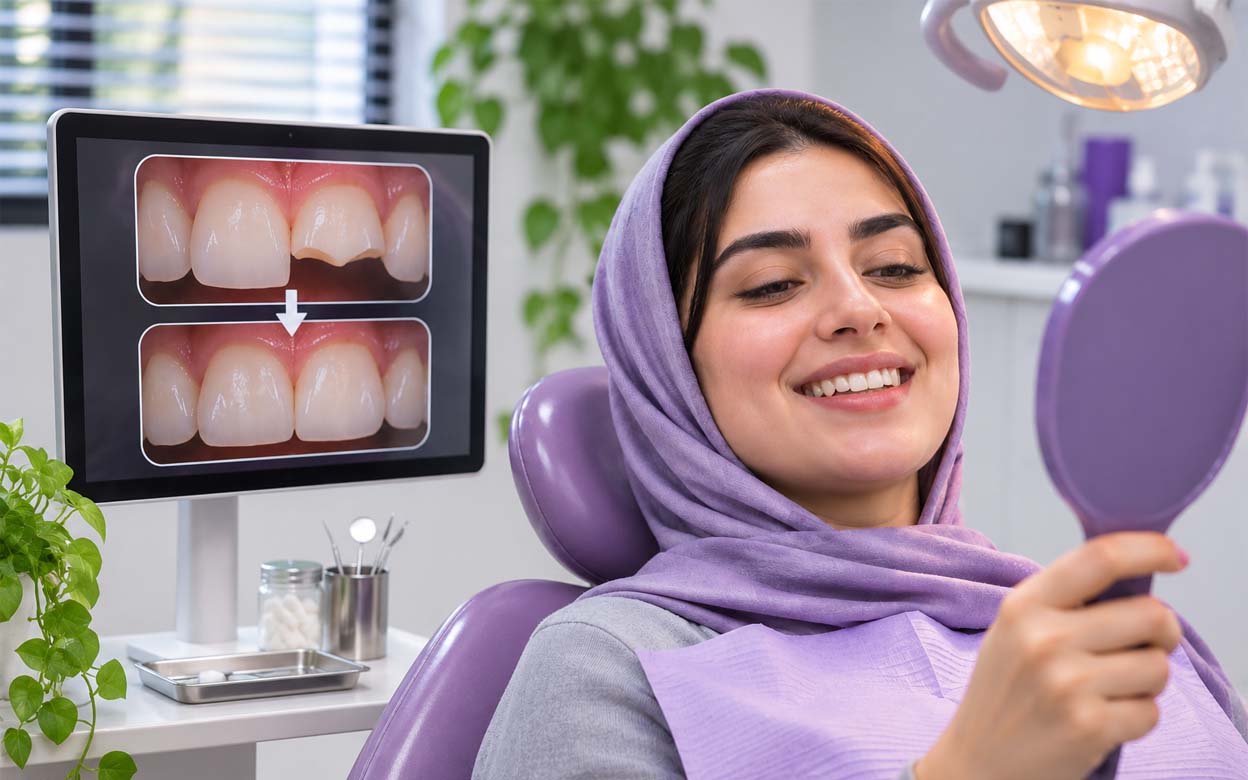
A cracked tooth develops when a fracture forms in the tooth enamel or extends into its deeper layers. Some cracks are superficial and painless, while others may reach the inner tissues or roots of the tooth.
Unlike bones, cracked teeth cannot heal naturally. However, a dentist can recommend treatments to prevent further damage and, in many cases, preserve the natural tooth.
A tooth crack is not always visible to the naked eye. The most common symptoms include:
One of the most common signs is a sharp pain when biting down or releasing pressure on the affected tooth.
A cracked tooth may become more sensitive when drinking cold water or consuming hot beverages.
Pain may occur only occasionally, making it difficult to identify exactly which tooth is affected.
In some cases, a crack may increase tooth sensitivity to sugary foods and drinks.
If the crack is deep enough to allow infection to develop, the surrounding gums may become swollen or painful.
Several factors can increase the risk of developing a cracked tooth:
Teeth grinding or clenching (bruxism)
Chewing hard foods or ice
Trauma or injury to the mouth
Large dental fillings that weaken the remaining tooth structure
Natural wear and tear associated with aging
Yes, many cracked teeth can be treated and preserved. However, the most suitable treatment depends on the severity and location of the crack.
If the crack is minor and has not significantly damaged the tooth structure, the dentist may use tooth-colored composite resin to restore the affected area.
However, not all superficial cracks require treatment. Some may only need regular monitoring.
For deeper cracks where the tooth can still be saved, a dental crown may help protect the remaining structure and reduce stress during chewing.
If the crack reaches the dental pulp and causes irreversible inflammation, damage, or infection, root canal treatment may be necessary.
After root canal treatment, an appropriate restoration or crown is often recommended to protect the tooth.
If the crack causes the tooth to split or extends into the root in a way that makes successful treatment impossible, extraction may be necessary.
In such cases, dental implants or bridges may be considered to replace the missing tooth.
No. Unlike a broken bone, a cracked tooth cannot naturally repair itself.
Some very superficial enamel cracks may only require monitoring. However, deeper cracks can worsen over time and may eventually lead to nerve damage or infection.
This is why early diagnosis is important.
Until you can visit your dentist, consider the following precautions:
Avoid chewing on the affected side of your mouth.
Do not bite hard foods, ice, or hard nuts.
Avoid extremely hot or cold foods if they trigger sensitivity.
Maintain good oral hygiene while brushing gently.
Schedule a dental examination to determine the severity of the crack.
If you experience severe pain, significant swelling, or fever, seek prompt dental care to evaluate the possibility of infection.
To reduce the risk of tooth fractures, avoid chewing extremely hard objects and never use your teeth to open packages.
If you grind your teeth at night, ask your dentist whether a custom night guard would be appropriate.
Regular dental checkups can also help identify dental problems before they become more serious.
Many superficial enamel cracks are painless and relatively harmless. However, a dental examination is necessary to determine the type and severity of the crack.
No. Root canal treatment is generally needed only when the dental pulp has developed irreversible inflammation, damage, or infection.
No. Many cracked teeth can be preserved with appropriate treatment. Extraction is usually considered when the damage is too extensive for successful restoration.
Not always. Some cracks are not visible on conventional dental X-rays. Diagnosis may require a clinical examination, specialized tests, and sometimes additional imaging.
A cracked tooth does not necessarily mean losing your natural tooth. In many cases, early diagnosis and appropriate treatment can help preserve the tooth and prevent further complications.
If you experience pain when chewing or suspect that one of your teeth may be cracked, do not delay a dental examination.
For professional dental evaluation and treatment, you can visit Dr. Zahra Sadat Shamekhi, a dentist practicing in the Mollasadra and Vanak area of Tehran.