
- Medical License No.: 144189
- 021-8805 0794
Dr. Zahra Sadat Shamekhi
General Dentist

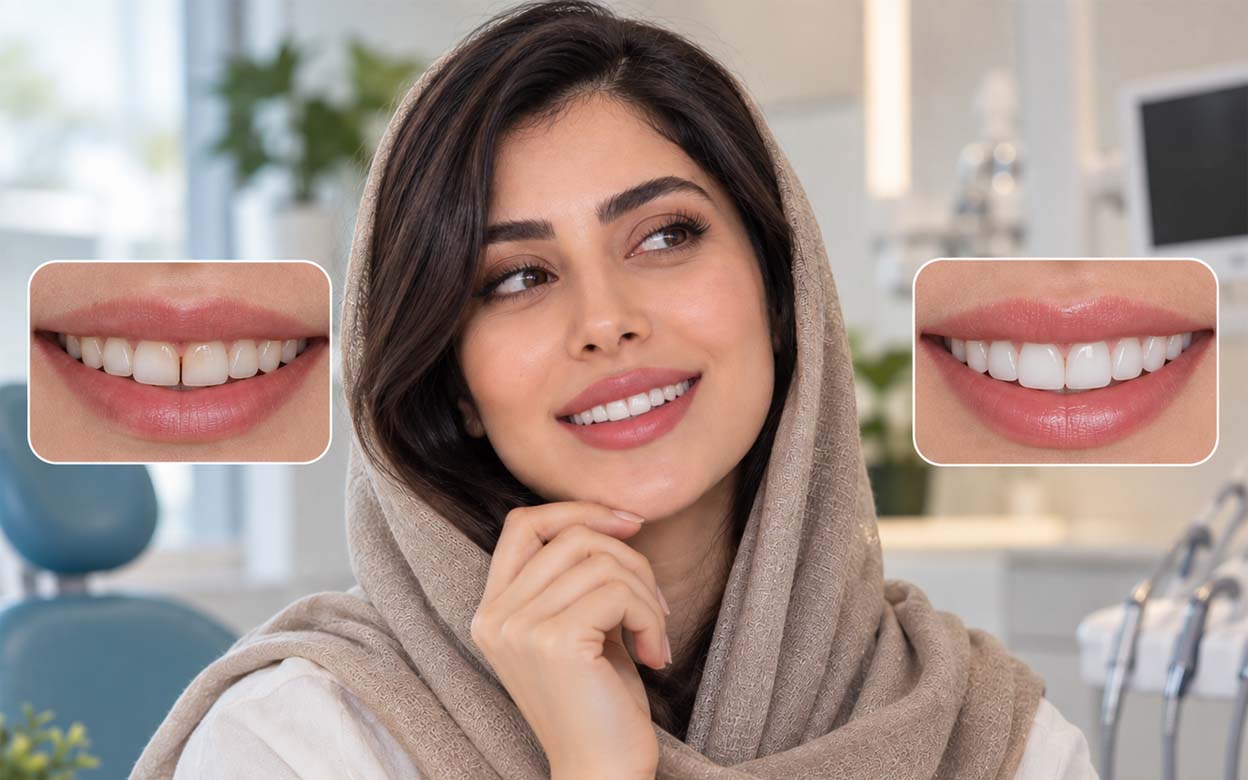
Composite veneers, also known as composite bonding, are made from tooth-colored resin material. The dentist usually applies and shapes the composite directly onto the tooth. This treatment often requires fewer appointments and, in many cases, less tooth preparation.
Porcelain veneers are thin ceramic shells custom-made to fit the teeth and bonded to their front surfaces. Porcelain veneers are generally more resistant to staining and can provide a highly natural-looking appearance.
Feature | Composite | Porcelain Veneers |
|---|---|---|
Material | Composite resin | Ceramic |
Aesthetics | Natural and attractive | Highly natural and translucent |
Tooth preparation | Usually less | Usually more |
Stain resistance | Lower | Higher |
Repairability | Easier | More difficult |
Cost | Usually lower | Usually higher |
Number of appointments | Fewer | Usually more |
One of the most important differences is the durability of composite and porcelain veneers. In general, porcelain veneers offer excellent durability and color stability. However, the actual lifespan of both treatments depends on the quality of the materials, the dentist’s expertise, oral hygiene, diet, and habits such as teeth grinding.
Composite bonding can also last for years, although it may require polishing, maintenance, or repair over time.
Both treatments can create natural-looking results when performed properly. However, porcelain veneers generally resemble natural tooth enamel more closely in terms of translucency and light reflection.
The final appearance of composite bonding depends greatly on the dentist’s skill in shade selection, shaping, layering, and polishing. When performed professionally, composite bonding can also provide highly natural and attractive results.
When it comes to stain resistance, porcelain veneers are generally more resistant to discoloration than composite resin.
Composite may become stained over time, particularly with frequent consumption of coffee, tea, tobacco, and highly pigmented foods. In many cases, professional polishing can help improve its appearance.
In most cases, composite bonding costs less than porcelain veneers. The final cost of either treatment depends on factors such as the number of teeth being treated, the type and brand of materials, the initial condition of the teeth, and the complexity of the treatment.
For this reason, price should not be the only factor when choosing between composite and porcelain veneers. Selecting an unsuitable treatment may result in additional repair or replacement costs in the future.
Both treatments can be used to improve the appearance of mildly misaligned teeth or small gaps between teeth. However, if the misalignment is significant, orthodontic treatment may be a more appropriate option.
For small gaps between teeth, either composite bonding or porcelain veneers may be suitable depending on the individual condition of the teeth.
There is no single answer that applies to everyone.
If lower cost, minimal tooth preparation, and easier repair are important to you, composite bonding may be a suitable option.
If greater color stability, better stain resistance, and a highly natural appearance are your priorities, porcelain veneers may be the better option for your needs.
However, the most suitable treatment can only be determined after evaluating the health of your teeth and gums, tooth shape, enamel condition, bite, and your expectations for the final result.
In most cases, porcelain veneers cost more than composite bonding.
Both can look natural, but porcelain generally offers translucency and optical properties that more closely resemble natural tooth enamel.
In many cases, composite bonding can be performed with minimal or no tooth preparation. However, this depends on the individual condition of the teeth.
Both treatments can be used for front teeth. The best choice depends on tooth shape and color, enamel condition, the amount of correction required, and the patient’s budget.
When deciding whether composite or porcelain veneers are better, there is no single treatment that is ideal for everyone. Composite bonding is generally more affordable and conservative, while porcelain veneers offer advantages in terms of color stability, stain resistance, and aesthetic properties.
To choose between composite bonding and porcelain veneers, your teeth should first be carefully evaluated. For professional consultation and personalized smile design treatment, you can visit Dr. Zahra Sadat Shamekhi’s dental office in the Mollasadra and Vanak area of Tehran.