
- Medical License No.: 144189
- 021-8805 0794
Dr. Zahra Sadat Shamekhi
General Dentist

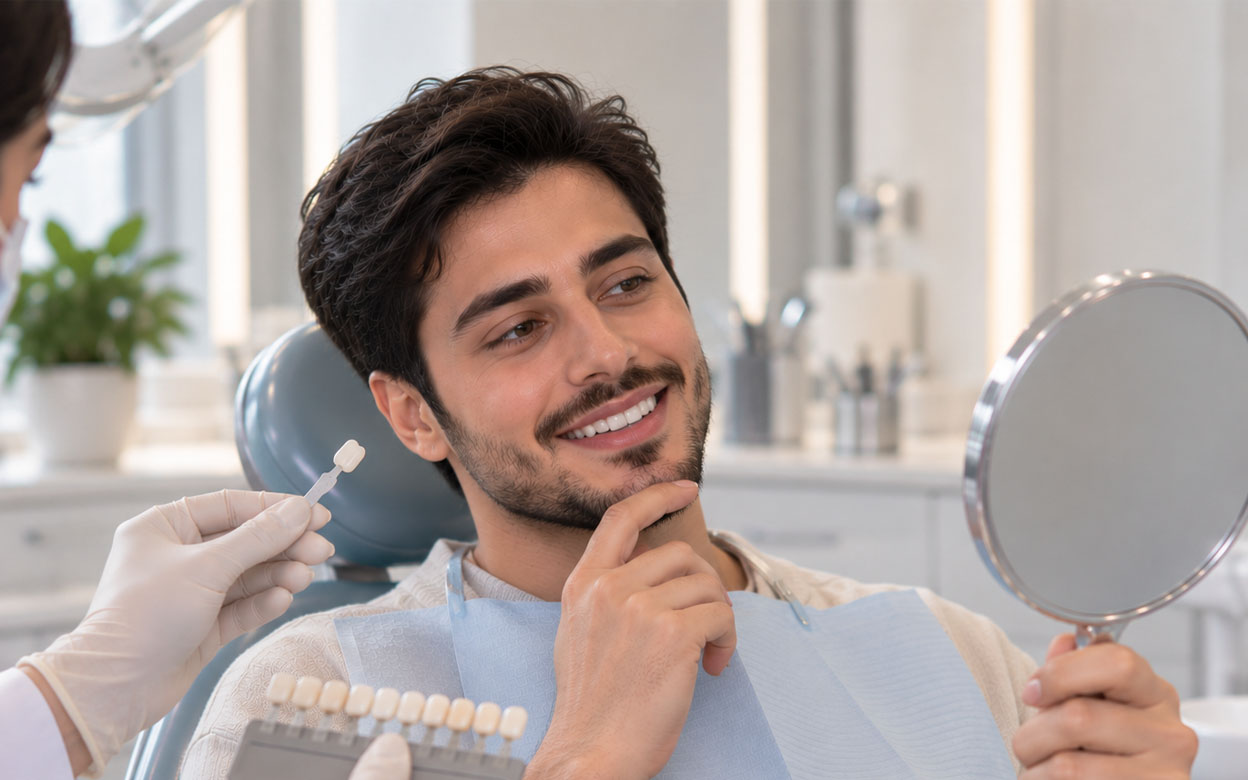
No, veneers do not necessarily ruin your natural teeth. Before treatment, the dentist should carefully evaluate the health of the teeth and gums. Existing problems such as tooth decay or gum disease should be treated before veneers are placed.
It is also important to remember that the natural tooth still remains underneath the veneer and continues to require proper oral hygiene and dental care.
Having veneers does not mean that the underlying teeth can no longer develop cavities or other dental problems.
The amount of tooth shaving for veneers is not the same for everyone.
With porcelain veneers, a certain amount of enamel is usually prepared to create enough space for the veneer and prevent the final result from looking bulky or unnatural.
The amount of tooth preparation depends on several factors, including the shape and position of the teeth, enamel thickness, the type of veneer, and the amount of correction required.
Whenever possible, preserving more of the natural enamel is generally preferred.
Yes. No-prep veneers can be an option for some patients, but they are not suitable for everyone.
Even treatments described as “no-prep veneers” may sometimes require minimal preparation of the tooth surface.
For example, if the teeth are already prominent, placing veneers without creating enough space may make them look too bulky or unnatural. Therefore, the decision to use no-prep veneers should be based on the actual condition of the teeth rather than simply trying to avoid tooth preparation.
Like any dental treatment, veneers may have potential side effects or complications. These may include:
Tooth sensitivity to hot or cold temperatures
Chipping or cracking of the veneer
Veneer debonding in some cases
Risk of tooth decay around or underneath veneers if oral hygiene is poor
Gum problems if veneers are improperly designed or placed
The need to replace veneers in the future
The likelihood of these problems depends on the original condition of the teeth, the amount of tooth preparation, bonding quality, ceramic material, bite, and aftercare.
Controlled and conservative tooth preparation is very different from excessive tooth shaving.
The goal of conservative cosmetic dentistry is to preserve as much healthy enamel as possible. Removing too much natural tooth structure may increase the risk of sensitivity and other complications.
For this reason, before getting veneers, the dentist should determine whether you are a suitable candidate and how much tooth preparation is actually necessary.
Yes. The tooth underneath a veneer is still a natural tooth and can develop decay.
The veneer itself does not directly cause tooth decay. However, plaque buildup around the edges of veneers, poor oral hygiene, or untreated dental problems can increase the risk of cavities.
Regular brushing, flossing, and routine dental checkups are therefore essential after getting veneers.
People with active tooth decay, gum disease, insufficient enamel, severe teeth grinding, or significant bite problems may require additional evaluation or treatment before getting veneers.
In some cases, if the main concern is tooth discoloration or misalignment, treatments such as teeth whitening or orthodontics may provide a more conservative alternative.
The answer is different for every patient.
For suitable candidates, veneers performed with proper planning and minimal necessary tooth preparation can provide natural-looking and long-lasting results.
However, placing veneers on healthy teeth without considering alternative treatments or unnecessarily removing too much tooth structure may not be appropriate.
This is why a professional dental examination and consultation are important before making a decision.
For many porcelain veneers, a small amount of enamel needs to be prepared. However, the goal is to preserve as much healthy natural tooth structure as possible.
If enamel has been removed during veneer preparation, the treatment is generally not completely reversible. The tooth may require another restoration after the veneer is removed.
Some patients may experience temporary sensitivity to hot or cold temperatures after treatment. The degree of sensitivity depends on the condition of the teeth and the type of treatment performed.
Not necessarily. No-prep veneers can be suitable for some patients, while in others they may make the teeth appear too bulky. The best approach should be determined after a dental examination.
So, do veneers damage your teeth? When veneers are properly planned, performed conservatively, and used for suitable patients, they do not necessarily mean damage to the natural teeth.
However, many porcelain veneers require some enamel removal, and this change is generally irreversible.
For this reason, the amount of tooth preparation, enamel health, and alternative treatment options should all be carefully considered before treatment.
For a professional evaluation and personalized smile design consultation, you can visit Dr. Zahra Sadat Shamekhi’s dental office in the Mollasadra and Vanak area of Tehran.